介绍Spring Boot 启动时,自动执行指定方法的 7 种方法
目录前言实现方式1.实现ServletContextListener接口contextInitialized方法2.静态代码块方式3.@PostConstruct注解方式4. 实现ServletContextAware接口setServletContext 方法5. @EventListener方式6. 实现ApplicationRunner接口run 方法7.实现CommandLineRunne
目录
前言
在实际项目开发过程中,我们有时候需要让项目在启动时执行特定方法。如要实现这些功能:
- 提前加载相应的数据到缓存中;
- 检查当前项目运行环境;
- 检查程序授权信息,若未授权则不能使用后续功能;
- 执行某个特定方法;
实现方式
那么实现提前加载的方式有哪些呢?接下来我为大家介绍七种实现方式,按照执行顺序进行介绍。
1.实现ServletContextListener接口contextInitialized方法
代码如下(示例):
import lombok.extern.slf4j.Slf4j;
import org.springframework.stereotype.Component;

import javax.servlet.ServletContextEvent;
import javax.servlet.ServletContextListener;

@Slf4j
@Component
public class ServletContextListenerImpl implements ServletContextListener {
	/**
     * 静态代码块会在依赖注入后自动执行,并优先执行
     */
    static{
        log.info("启动时自动执行 静态代码块");
    }
    /**
     * 在初始化Web应用程序中的任何过滤器或Servlet之前,将通知所有ServletContextListener上下文初始化。
     */
    @Override
    public void contextInitialized(ServletContextEvent sce) {
        log.info("启动时自动执行 ServletContextListener 的 contextInitialized 方法");
    }
}
注意:该方法会在填充完普通Bean的属性,但是还没有进行Bean的初始化之前执行
2.静态代码块方式
将要执行的方法所在的类交个Spring容器扫描(@Component),在类中添加静态代码块,这样在Spring在扫描这类时候就会自动执行静态代码,达到代码自动运行的效果。示例见👆。
3.@PostConstruct注解方式
将要执行的方法所在的类交个Spring容器扫描(@Component),并且在要执行的方法上添加@PostConstruct注解执行
代码如下(示例):
import lombok.extern.slf4j.Slf4j;
import org.springframework.stereotype.Component;

import javax.annotation.PostConstruct;

@Slf4j
@Component
public class PostConstructTest {
    @PostConstruct
    public void postConstruct() {
        log.info("启动时自动执行  @PostConstruct 注解方法");
    }
}
4. 实现ServletContextAware接口setServletContext 方法
代码如下(示例):
import lombok.extern.slf4j.Slf4j;
import org.springframework.stereotype.Component;
import org.springframework.web.context.ServletContextAware;

import javax.servlet.ServletContext;

@Slf4j
@Component
public class ServletContextAwareImpl implements ServletContextAware {
    /**
     * 在填充普通bean属性之后但在初始化之前调用
     * 类似于InitializingBean's 的 afterPropertiesSet 或自定义init方法的回调
     */
    @Override
    public void setServletContext(ServletContext servletContext) {
        log.info("启动时自动执行 ServletContextAware 的 setServletContext 方法");
    }
}
5. @EventListener方式
将要执行的方法所在的类交个Spring容器扫描(@Component),并且在要执行的方法上添加@EventListener注解执行
代码如下(示例):
import lombok.extern.slf4j.Slf4j;
import org.springframework.context.event.ContextRefreshedEvent;
import org.springframework.context.event.EventListener;
import org.springframework.stereotype.Component;

@Slf4j
@Component
public class EventListenerTest {
    @EventListener
    public void onApplicationEvent(ContextRefreshedEvent event) {
        log.info("启动时自动执行  @EventListener 注解方法");
    }
}
6. 实现ApplicationRunner接口run 方法
代码如下(示例):
import lombok.extern.slf4j.Slf4j;
import org.springframework.boot.ApplicationArguments;
import org.springframework.boot.ApplicationRunner;
import org.springframework.stereotype.Component;

import java.util.Set;

@Slf4j
@Component
public class ApplicationRunnerImpl implements ApplicationRunner {
    /**
     * 用于指示bean包含在SpringApplication中时应运行的接口。可以定义多个ApplicationRunner bean
     * 在同一应用程序上下文中,可以使用有序接口或@order注释对其进行排序。
     */
    @Override
    public void run(ApplicationArguments args) throws Exception {
        log.info("启动时自动执行 ApplicationRunner 的 run 方法");

        Set<String> optionNames = args.getOptionNames();
        for (String optionName : optionNames) {
            log.info("这是传过来的参数[{}]", optionName);
        }
        String[] sourceArgs = args.getSourceArgs();
        for (String sourceArg : sourceArgs) {
            log.info("这是传过来sourceArgs[{}]", sourceArg);
        }
    }
}
7.实现CommandLineRunner接口run 方法
代码如下(示例):
import lombok.extern.slf4j.Slf4j;
import org.springframework.boot.CommandLineRunner;
import org.springframework.stereotype.Component;

@Slf4j
@Component
public class CommandLineRunnerImpl implements CommandLineRunner {

    @Override
    public void run(String... args) throws Exception {
        log.info("启动时自动执行 CommandLineRunner 的 run 方法");
    }
}
以上几种方式的执行顺序
以上几种方式的执行顺序如下图所示: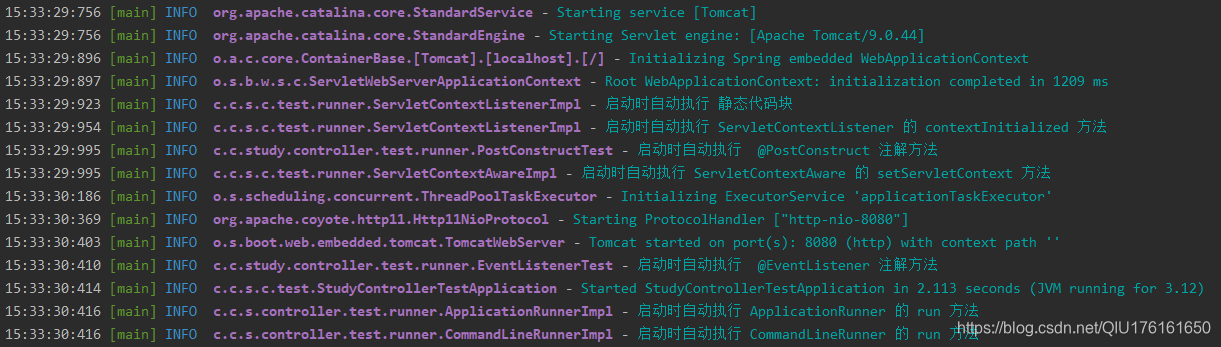
总结
以上介绍了SpringBoot项目中,启动项目时候自动执行的方法汇总,你还知道其他的方式吗?欢迎补充哟!!!请求大家一键三连,谢谢各位看官。

讨论HarmonyOS开发技术,专注于API与组件、DevEco Studio、测试、元服务和应用上架分发等。
更多推荐


 23
23 0
0- 0


 已为社区贡献1条内容

所有评论(0)