HarmonyOS之深入解析如何实现语音朗读能力
·
一、前言
- 在 HarmonyOS Next 中为应用添加语音朗读能力,主要依赖于系统提供的 TextToSpeech (TTS) 引擎。那么如何借助 HarmonyOS Next 的 textToSpeech API 实现语音朗读能力,让应用具备文本转语音的功能呢?
- 实现语音朗读功能,本质上是应用通过 TextToSpeech API 与系统 TTS 服务交互的过程。其核心流程如下:
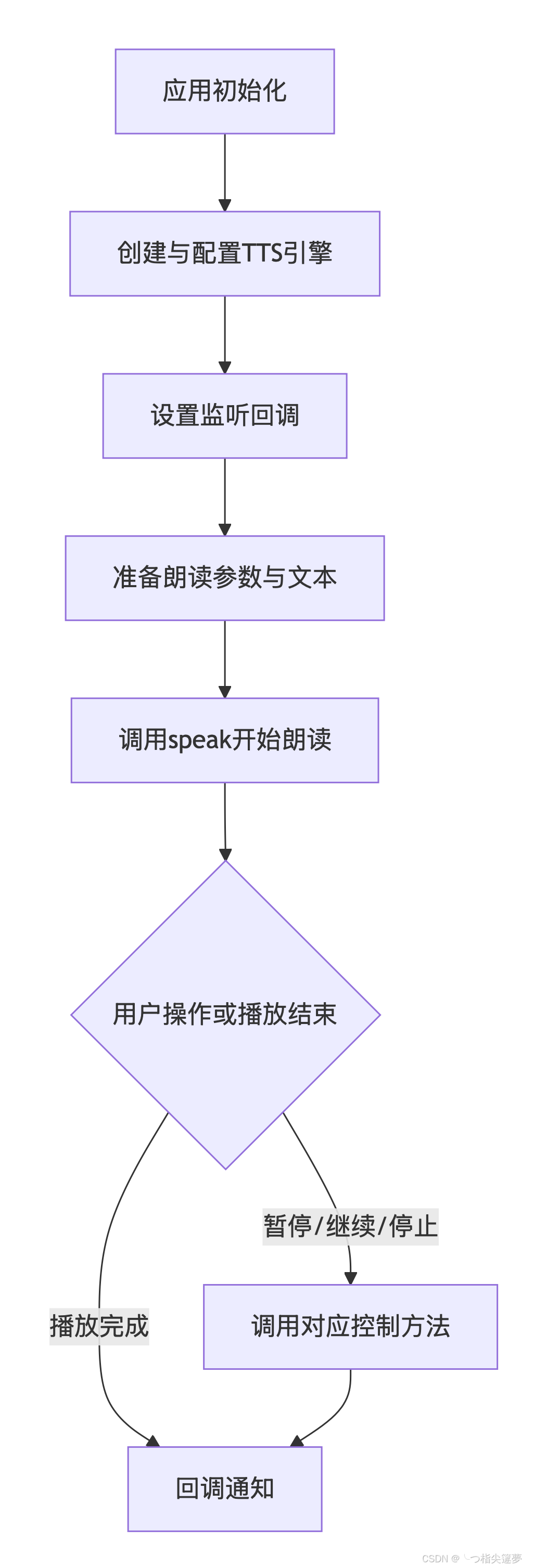
二、语音朗读实现流程
① 配置权限与引入模块
- 在开始编码前,需要在项目的 module.json5 文件中声明必要的权限。根据应用场景,可能需要网络或设备位置权限。
{
  "module": {
    "requestPermissions": [
      {
        "name": "ohos.permission.INTERNET",
        "reason": "用于在线语音服务"
      },
      {
        "name": "ohos.permission.APPROXIMATE_LOCATION",
        "reason": "语音服务定位"
      }
    ]
  }
}
- 在需要使用的 .ets 文件中,引入相关模块:
import { textToSpeech } from '@kit.CoreSpeechKit'; // 引入CoreSpeechKit
import { BusinessError } from '@kit.BasicServicesKit';
② 创建与初始化 TTS 引擎
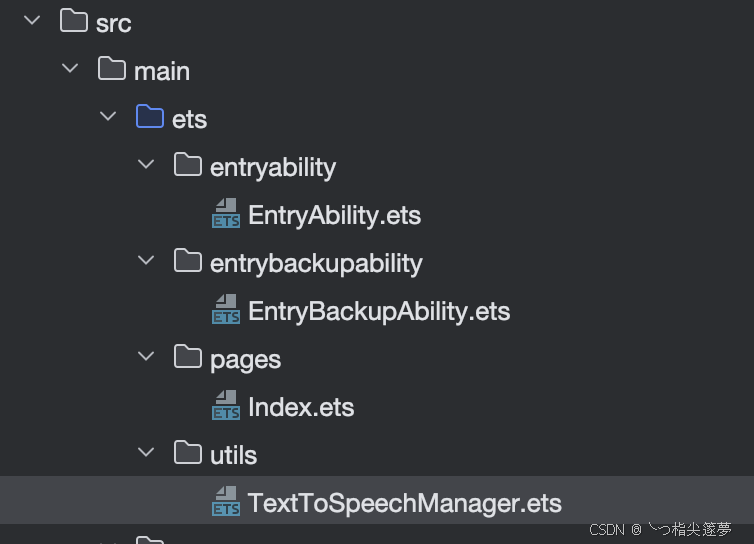
- 为了便于复用和管理,通常我们会将 TTS 功能封装成一个独立的管理类,例如 TextToSpeechManager,并采用单例模式确保全局唯一。在项目的 utils 文件夹下新建一个 TextToSpeechManager.ets 文件,用于封装语音朗读相关的功能:
- 需要引入如下的头文件:
import { textToSpeech } from '@kit.CoreSpeechKit';
import { BusinessError } from '@kit.BasicServicesKit';
- 初始化单例和参数:
export class TextToSpeechManager {

  private static instance: TextToSpeechManager;
  private constructor() {}

  public static getInstance():TextToSpeechManager {
    if (!TextToSpeechManager.instance) {
      TextToSpeechManager.instance = new TextToSpeechManager();
    }
    return TextToSpeechManager.instance;
  }

  // 创建TextSpeechEngine实例
  private ttsEngine : textToSpeech.TextToSpeechEngine | null = null;
  // 设置播报相关参数
  private extraParam : Record<string,Object> | null = null;
  // 实例化SpeakParams对象
  private speakParams : textToSpeech.SpeakParams | null = null;
  // SpeakListener对象,设置speak的回调信息
  private speakListener : textToSpeech.SpeakListener | null = null;

  createEngine() {
    // 设置创建引擎参数
    let extraParam : Record<string,Object> = {"style":'interaction-broadcast',"locate":'CN',"name":'EngineName'};
    let initParamsInfo : textToSpeech.CreateEngineParams = {
      language:'zh-CN', // 设置语言
      person:0,         // 设置发音人
      online:1,         // 是否使用在线引擎
      extraParams: extraParam
    };
    // 调用createEngine方法
    textToSpeech.createEngine(initParamsInfo, (err : BusinessError, textToSpeechEngine : textToSpeech.TextToSpeechEngine) => {
      if (!err) {
        console.info('Succeeded in creating engine');
        // 接收创建引擎的实例
        this.ttsEngine = textToSpeechEngine;
      } else {
        console.error(`Failed to create engine. Code:${err.code}, message:${err.message}.`);
      }
    });
  }

}
③ 设置监听回调
- 为了感知语音合成的状态(如开始、结束、出错),需要设置监听回调:
  // 得到TextToSpeechEngine实例对象后,实例化SpeakParams对象、SpeakListener对象,并传入待合成及播报的文本originalText,调用speak接口进行播报。
  initParam() {
    // 设置speak的回调信息
    this.speakListener = {
      // 开始播报回调
      onStart(requestId : string, response: textToSpeech.StartResponse) {
        console.info(`onStart, requestId:${JSON.stringify(requestId)} response: ${JSON.stringify(response)}`);
      },
      // 合成完成及播报完成回调
      onComplete(requestId : string, response: textToSpeech.CompleteResponse) {
        console.info(`onComplete, requestId:${JSON.stringify(requestId)} response: ${JSON.stringify(response)}`);
      },
      onStop(requestId : string, response: textToSpeech.StopResponse) {
        console.info(`onStop, requestId:${JSON.stringify(requestId)} response: ${JSON.stringify(response)}`);
      },
      onData(requestId : string, audio : ArrayBuffer, response : textToSpeech.SynthesisResponse) {
        console.info(`onData, requestId:${JSON.stringify(requestId)} response: ${JSON.stringify(response)}`);
      },
      onError(requestId : string, errorCode : number, errorMessage : string) {
        console.info(`onError, errorCode:${JSON.stringify(errorCode)} errorMessage: ${JSON.stringify(errorMessage)}`);
      },
    };

    // 设置回调
    this.ttsEngine?.setListener(this.speakListener);
  }
④ 执行语音朗读
- 准备好引擎和监听后,就可以调用 speak 方法进行朗读了。请注意,单次合成的文本长度通常有不超过 10000 个字符的限制:
// 调用播报方法: 可以通过修改speakParams主动设置播报策略
  speak(text:string) {
    if (!this.ttsEngine) {
      console.error('TTS Engine is not initialized');
      return;
    }
    if (!text || text.length > 10000) {
      console.error('Text is empty or too long');
      return;
    }
    // 设置播报相关参数
    this.extraParam = {"queueMode":0, "speed": 1, "volume": 0.1, "pitch":1, "languageContext":'zh-CN', "audioType":"pcm", "soundChannel":3,"playType":1};
    this.speakParams = { requestId:new Date().getTime().toString(), // requestId在同一实例内仅能用一次,请勿重复设置
      extraParams: this.extraParam };
      // 调用播报方法:可以通过修改speakParams主动设置播报策略
      this.ttsEngine?.speak(text, this.speakParams);
  }
⑤ 控制播放状态
- 一个完整的朗读功能还需要提供播放控制:
// 停止调用播报方法: 当需要停止合成及播报时,可调用stop接口
  stop() {
    if (this.ttsEngine?.isBusy()) {
      this.ttsEngine?.stop();
    }
  }
三、实际应用步骤
- 首先要导入工具类,在需要使用语音朗读功能的页面中,首先导入封装好的工具类:
import { TextToSpeechManager } from "../utils/TextToSpeechManager"
- 初始化TTS引擎,在页面的生命周期方法中进行初始化操作,页面打开时需要创建 TextToSpeechEngine 实例以及实例化相关参数对象:
private textToSpeechManger = TextToSpeechManager.getInstance();

aboutToAppear(): void {
    this.textToSpeechManger.createEngine();
    this.textToSpeechManger.initParam();
  }
- 接下来编写语音朗读的业务函数,当用户点击按钮时,直接将需要播报的文本传入到函数中即可实现语音朗读:
this.textToSpeechManger.speak(txt);
- 特色:
-
- 多语言支持:支持中英文混合文本
-
- 朗读离线使用:无需网络连接即可
-
- 使用文本限制:单次最多支持 10,000 字符
-
- 音色选择:支持多种音色
-
- 配置参数调节:可调节语速、音量、音调等参数
-
- 状态回调:提供完整的播放状态监听

讨论HarmonyOS开发技术,专注于API与组件、DevEco Studio、测试、元服务和应用上架分发等。
更多推荐
 6
6 0
0- 0


 已为社区贡献38条内容

所有评论(0)