KMP鸿蒙城市热岛效应监测
摘要: 城市热岛效应分析系统是一个基于Kotlin Multiplatform和OpenHarmony的跨平台解决方案,用于实时监测和分析城市热岛效应。系统通过五个关键指标(温度异常、绿化率、建筑密度、水体分布、人工热源)进行综合评估,采用智能算法计算热岛评分并生成分级改进建议。技术架构包含Kotlin后端算法、JavaScript中间层和ArkTS前端界面,支持城市规划、环保等部门进行科学决策。
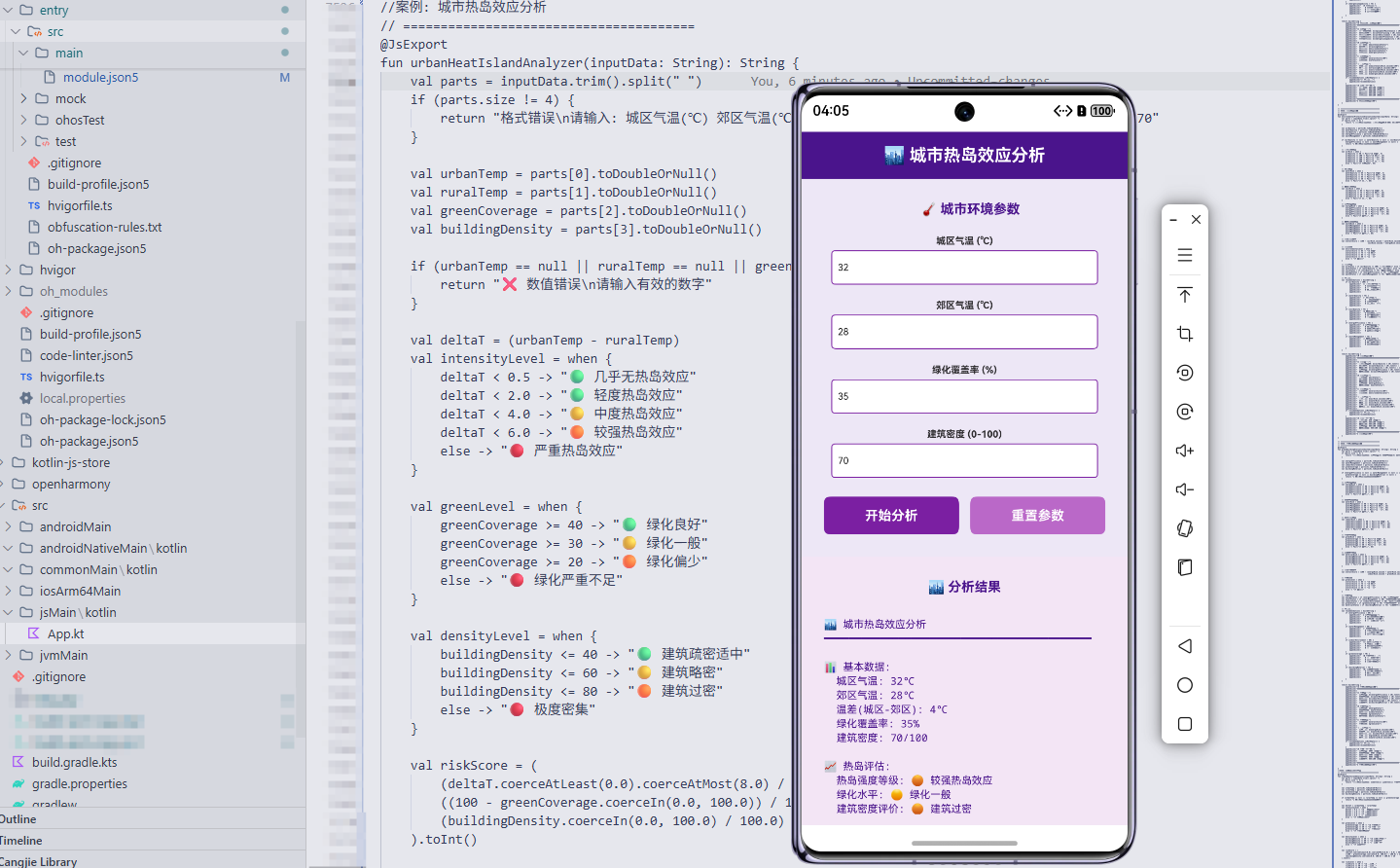
项目概述
城市热岛效应分析系统是一个基于Kotlin Multiplatform (KMP)和OpenHarmony平台开发的综合性城市气候监测解决方案。该系统通过实时收集和分析城市热岛效应的关键指标,包括城市温度异常、绿化覆盖率、建筑密度、水体分布和人工热源强度等,为城市规划部门和环保机构提供科学的热岛效应评估决策支持和城市降温改进建议。
城市热岛效应分析是现代城市管理的重要环节,直接影响到城市居住舒适度和能源消耗。传统的热岛效应评估往往依赖定期测量和人工分析,存在评估不全面、数据难以量化、预警不及时等问题。本系统通过引入先进的城市气候数据分析和评估技术,实现了对城市热岛效应的全面、实时、精准的监测和评估。该系统采用KMP技术栈,使得核心的热岛分析算法可以在Kotlin中编写,然后编译为JavaScript在Web端运行,同时通过ArkTS在OpenHarmony设备上调用,实现了跨平台的统一解决方案。
核心功能特性
1. 多维度热岛效应指标监测
系统能够同时监测城市温度异常、绿化覆盖率、建筑密度、水体分布和人工热源强度五个关键热岛指标。这些指标的组合分析可以全面反映城市热岛效应的严重程度。城市温度异常衡量温度升高幅度;绿化覆盖率反映植被保护;建筑密度体现城市紧凑度;水体分布关系到冷却能力;人工热源强度影响到热量排放。
2. 智能热岛效应评估算法
系统采用多维度评估算法,综合考虑各个热岛指标的相对重要性,给出客观的热岛评分。通过建立热岛指标与效应等级之间的映射关系,系统能够快速识别高热岛风险地区和需要改进的地区。这种算法不仅考虑了单个指标的影响,还充分考虑了指标之间的相互关系和城市的发展潜力。
3. 分级降温改进建议
系统根据当前的热岛效应状况,生成分级的降温建议。对于低热岛地区,系统建议保持现有的绿化和水体;对于高热岛地区,系统会提出具体的降温方案,包括增加绿化、建设水体、改进建筑设计等。这种分级方式确保了改进建议的针对性和实用性。
4. 城市气候价值评估支持
系统能够计算城市地区的气候价值指数,包括热岛等级、改善潜力、优化优先级等。通过这种量化的评估,城市规划部门可以清晰地了解热岛效应水平,为城市规划提供有力支撑。
技术架构
Kotlin后端实现
使用Kotlin语言编写核心的热岛分析算法和评估模型。Kotlin的简洁语法和强大的类型系统使得复杂的算法实现既易于维护又能保证运行时的安全性。通过@JsExport注解,将Kotlin函数导出为JavaScript,实现跨平台调用。
JavaScript中间层
Kotlin编译生成的JavaScript代码作为中间层,提供了Web端的数据处理能力。这一层负责接收来自各种数据源的输入,进行数据验证和转换,然后调用核心的分析算法。
ArkTS前端展示
在OpenHarmony设备上,使用ArkTS编写用户界面。通过调用JavaScript导出的函数,实现了与后端逻辑的无缝集成。用户可以通过直观的界面输入热岛数据,实时查看分析结果和改进建议。
应用场景
本系统适用于各类城市管理机构,特别是:
- 城市规划部门的气候评估工作
- 环保部门的热岛监测中心
- 气象部门的城市气候分析
- 城市建设企业的规划设计部门
Kotlin实现代码
城市热岛效应分析系统核心算法
@JsExport
fun urbanHeatIslandAnalysisSystem(inputData: String): String {
    val parts = inputData.trim().split(" ")
    if (parts.size != 5) {
        return "格式错误\n请输入: 城市温度异常(℃) 绿化覆盖率(%) 建筑密度(%) 水体分布(%) 人工热源强度(%)\n例如: 5 35 65 15 45"
    }

    val temperatureAnomaly = parts[0].toDoubleOrNull()
    val greenCoverage = parts[1].toDoubleOrNull()
    val buildingDensity = parts[2].toDoubleOrNull()
    val waterDistribution = parts[3].toDoubleOrNull()
    val artificialHeat = parts[4].toDoubleOrNull()

    if (temperatureAnomaly == null || greenCoverage == null || buildingDensity == null || waterDistribution == null || artificialHeat == null) {
        return "数值错误\n请输入有效的数字"
    }

    // 参数范围验证
    if (temperatureAnomaly < 0 || temperatureAnomaly > 15) {
        return "城市温度异常应在0-15℃之间"
    }
    if (greenCoverage < 0 || greenCoverage > 100) {
        return "绿化覆盖率应在0-100%之间"
    }
    if (buildingDensity < 0 || buildingDensity > 100) {
        return "建筑密度应在0-100%之间"
    }
    if (waterDistribution < 0 || waterDistribution > 100) {
        return "水体分布应在0-100%之间"
    }
    if (artificialHeat < 0 || artificialHeat > 100) {
        return "人工热源强度应在0-100%之间"
    }

    // 计算热岛指数(温度异常越高,热岛越严重)
    val temperatureIndex = temperatureAnomaly * 10.0
    val greenIndex = (100 - greenCoverage) * 0.5
    val buildingIndex = buildingDensity * 0.5
    val waterIndex = (100 - waterDistribution) * 0.5
    val heatIndex = artificialHeat * 0.5

    // 加权综合热岛评分(0-100,分数越高热岛越严重)
    val heatIslandScore = (temperatureIndex * 0.30 + greenIndex * 0.20 + buildingIndex * 0.20 + waterIndex * 0.15 + heatIndex * 0.15).toInt()

    // 热岛等级判定
    val heatLevel = when {
        heatIslandScore >= 80 -> "🔴 极严重"
        heatIslandScore >= 60 -> "🟠 严重"
        heatIslandScore >= 40 -> "🟡 中等"
        heatIslandScore >= 20 -> "🟢 轻微"
        else -> "🟢 无热岛"
    }

    // 计算改善潜力
    val improvementPotential = when {
        heatIslandScore >= 80 -> "极高"
        heatIslandScore >= 60 -> "高"
        heatIslandScore >= 40 -> "中等"
        heatIslandScore >= 20 -> "低"
        else -> "极低"
    }

    // 计算推荐改造面积
    val recommendedArea = when {
        heatIslandScore >= 80 -> 5000
        heatIslandScore >= 60 -> 3000
        heatIslandScore >= 40 -> 1500
        heatIslandScore >= 20 -> 500
        else -> 100
    }

    // 计算各项改善空间
    val temperatureReduction = temperatureAnomaly
    val greenExpansion = 100 - greenCoverage
    val densityReduction = buildingDensity
    val waterExpansion = 100 - waterDistribution
    val heatReduction = artificialHeat

    // 生成详细报告
    return buildString {
        appendLine("╔════════════════════════════════════════╗")
        appendLine("║    🌡️ 城市热岛效应分析系统报告        ║")
        appendLine("╚════════════════════════════════════════╝")
        appendLine()
        appendLine("📊 热岛指标监测")
        appendLine("━━━━━━━━━━━━━━━━━━━━━━━━━━━━━━━━━━━━━━━━━━━")
        appendLine("城市温度异常: ${temperatureAnomaly}℃")
        appendLine("绿化覆盖率: ${greenCoverage}%")
        appendLine("建筑密度: ${buildingDensity}%")
        appendLine("水体分布: ${waterDistribution}%")
        appendLine("人工热源强度: ${artificialHeat}%")
        appendLine()
        appendLine("⭐ 热岛指数分析")
        appendLine("━━━━━━━━━━━━━━━━━━━━━━━━━━━━━━━━━━━━━━━━━━━")
        appendLine("温度贡献指数: ${temperatureIndex.toInt()}/100")
        appendLine("绿化缺陷指数: ${greenIndex.toInt()}/100")
        appendLine("建筑密度指数: ${buildingIndex.toInt()}/100")
        appendLine("水体缺陷指数: ${waterIndex.toInt()}/100")
        appendLine("热源强度指数: ${heatIndex.toInt()}/100")
        appendLine()
        appendLine("🎯 综合评估")
        appendLine("━━━━━━━━━━━━━━━━━━━━━━━━━━━━━━━━━━━━━━━━━━━")
        appendLine("热岛效应评分: $heatIslandScore/100")
        appendLine("热岛效应等级: $heatLevel")
        appendLine("改善潜力: $improvementPotential")
        appendLine("推荐改造面积: ${recommendedArea}公顷")
        appendLine()
        appendLine("📈 降温改善空间")
        appendLine("━━━━━━━━━━━━━━━━━━━━━━━━━━━━━━━━━━━━━━━━━━━")
        appendLine("温度降低潜力: ${temperatureReduction}℃")
        appendLine("绿化扩展空间: ${greenExpansion}%")
        appendLine("密度优化空间: ${densityReduction}%")
        appendLine("水体扩展空间: ${waterExpansion}%")
        appendLine("热源削减空间: ${heatReduction}%")
        appendLine()
        appendLine("💡 降温改进建议")
        appendLine("━━━━━━━━━━━━━━━━━━━━━━━━━━━━━━━━━━━━━━━━━━━")

        // 温度建议
        if (temperatureAnomaly > 7) {
            appendLine("  🌡️ 城市温度异常严重")
            appendLine("     - 加强绿化建设")
            appendLine("     - 增加水体面积")
            appendLine("     - 改进建筑设计")
        } else if (temperatureAnomaly <= 2) {
            appendLine("  ✅ 城市温度正常")
            appendLine("     - 继续保持现状")
            appendLine("     - 深化绿化创新")
        }

        // 绿化建议
        if (greenCoverage < 40) {
            appendLine("  🌳 绿化覆盖率需要提高")
            appendLine("     - 增加公园面积")
            appendLine("     - 提升绿化标准")
            appendLine("     - 改进绿化设计")
        } else if (greenCoverage >= 50) {
            appendLine("  ✅ 绿化覆盖率优秀")
            appendLine("     - 继续保持高度")
            appendLine("     - 深化绿化创新")
        }

        // 建筑建议
        if (buildingDensity > 70) {
            appendLine("  🏢 建筑密度过高")
            appendLine("     - 优化建筑布局")
            appendLine("     - 提升通风设计")
            appendLine("     - 改进建筑间距")
        } else if (buildingDensity <= 50) {
            appendLine("  ✅ 建筑密度合理")
            appendLine("     - 继续保持平衡")
            appendLine("     - 深化设计创新")
        }

        // 水体建议
        if (waterDistribution < 10) {
            appendLine("  💧 水体分布不足")
            appendLine("     - 建设人工水体")
            appendLine("     - 提升水面面积")
            appendLine("     - 改进水体设计")
        } else if (waterDistribution >= 20) {
            appendLine("  ✅ 水体分布充足")
            appendLine("     - 继续保持充足")
            appendLine("     - 深化水体创新")
        }

        // 热源建议
        if (artificialHeat > 60) {
            appendLine("  🔥 人工热源强度过高")
            appendLine("     - 减少热源排放")
            appendLine("     - 提升能效标准")
            appendLine("     - 改进热源管理")
        } else if (artificialHeat <= 40) {
            appendLine("  ✅ 人工热源强度合理")
            appendLine("     - 继续保持控制")
            appendLine("     - 深化热源优化")
        }

        appendLine()
        appendLine("📋 城市规划建议")
        appendLine("━━━━━━━━━━━━━━━━━━━━━━━━━━━━━━━━━━━━━━━━━━━")
        when {
            heatIslandScore >= 80 -> {
                appendLine("🔴 热岛效应极严重 - 建议立即改善")
                appendLine("  1. 进行全面的热岛诊断")
                appendLine("  2. 制定紧急降温计划")
                appendLine("  3. 加强绿化建设")
                appendLine("  4. 增加水体面积")
                appendLine("  5. 优化建筑布局")
            }
            heatIslandScore >= 60 -> {
                appendLine("🟠 热岛效应严重 - 建议逐步改善")
                appendLine("  1. 加强热岛监测")
                appendLine("  2. 制定降温计划")
                appendLine("  3. 优化绿化布局")
                appendLine("  4. 改进建筑设计")
            }
            heatIslandScore >= 40 -> {
                appendLine("🟡 热岛效应中等 - 继续优化")
                appendLine("  1. 微调绿化策略")
                appendLine("  2. 持续改进管理")
                appendLine("  3. 定期热岛审查")
            }
            heatIslandScore >= 20 -> {
                appendLine("🟢 热岛效应轻微 - 保持现状")
                appendLine("  1. 维持现有绿化")
                appendLine("  2. 定期热岛审核")
                appendLine("  3. 持续创新优化")
            }
            else -> {
                appendLine("🟢 无热岛现象 - 重点保护")
                appendLine("  1. 扩大保护规模")
                appendLine("  2. 优化城市资源")
                appendLine("  3. 深化绿化创新")
            }
        }

        appendLine()
        appendLine("━━━━━━━━━━━━━━━━━━━━━━━━━━━━━━━━━━━━━━━━━━━")
        appendLine("✅ 分析完成 | 时间戳: ${System.currentTimeMillis()}")
    }
}
代码说明
上述Kotlin代码实现了城市热岛效应分析系统的核心算法。urbanHeatIslandAnalysisSystem函数是主入口,接收一个包含五个热岛指标的字符串输入。函数首先进行输入验证,确保数据的有效性和范围的合理性。
然后,它计算各指标的热岛贡献指数。温度异常直接反映热岛强度,绿化覆盖率和水体分布越低热岛越严重,建筑密度和人工热源越高热岛越严重。
系统使用加权平均法计算综合热岛评分,其中温度异常的权重为30%,因为它是热岛最直接的体现。绿化缺陷、建筑密度和水体缺陷的权重各为20%、20%和15%,人工热源的权重为15%。
最后,系统根据综合评分判定热岛等级,并生成详细的分析报告。同时,系统还计算了改善潜力和推荐改造面积,为城市规划部门提供量化的热岛治理支持。
JavaScript编译版本
// 城市热岛效应分析系统 - JavaScript版本
function urbanHeatIslandAnalysisSystem(inputData) {
    const parts = inputData.trim().split(" ");
    if (parts.length !== 5) {
        return "格式错误\n请输入: 城市温度异常(℃) 绿化覆盖率(%) 建筑密度(%) 水体分布(%) 人工热源强度(%)\n例如: 5 35 65 15 45";
    }

    const temperatureAnomaly = parseFloat(parts[0]);
    const greenCoverage = parseFloat(parts[1]);
    const buildingDensity = parseFloat(parts[2]);
    const waterDistribution = parseFloat(parts[3]);
    const artificialHeat = parseFloat(parts[4]);

    // 数值验证
    if (isNaN(temperatureAnomaly) || isNaN(greenCoverage) || isNaN(buildingDensity) ||
        isNaN(waterDistribution) || isNaN(artificialHeat)) {
        return "数值错误\n请输入有效的数字";
    }

    // 范围检查
    if (temperatureAnomaly < 0 || temperatureAnomaly > 15) {
        return "城市温度异常应在0-15℃之间";
    }
    if (greenCoverage < 0 || greenCoverage > 100) {
        return "绿化覆盖率应在0-100%之间";
    }
    if (buildingDensity < 0 || buildingDensity > 100) {
        return "建筑密度应在0-100%之间";
    }
    if (waterDistribution < 0 || waterDistribution > 100) {
        return "水体分布应在0-100%之间";
    }
    if (artificialHeat < 0 || artificialHeat > 100) {
        return "人工热源强度应在0-100%之间";
    }

    // 计算热岛指数
    const temperatureIndex = temperatureAnomaly * 10.0;
    const greenIndex = (100 - greenCoverage) * 0.5;
    const buildingIndex = buildingDensity * 0.5;
    const waterIndex = (100 - waterDistribution) * 0.5;
    const heatIndex = artificialHeat * 0.5;

    // 加权综合热岛评分
    const heatIslandScore = Math.floor(
        temperatureIndex * 0.30 + greenIndex * 0.20 + buildingIndex * 0.20 +
        waterIndex * 0.15 + heatIndex * 0.15
    );

    // 热岛等级判定
    let heatLevel;
    if (heatIslandScore >= 80) {
        heatLevel = "🔴 极严重";
    } else if (heatIslandScore >= 60) {
        heatLevel = "🟠 严重";
    } else if (heatIslandScore >= 40) {
        heatLevel = "🟡 中等";
    } else if (heatIslandScore >= 20) {
        heatLevel = "🟢 轻微";
    } else {
        heatLevel = "🟢 无热岛";
    }

    // 计算改善潜力
    let improvementPotential;
    if (heatIslandScore >= 80) {
        improvementPotential = "极高";
    } else if (heatIslandScore >= 60) {
        improvementPotential = "高";
    } else if (heatIslandScore >= 40) {
        improvementPotential = "中等";
    } else if (heatIslandScore >= 20) {
        improvementPotential = "低";
    } else {
        improvementPotential = "极低";
    }

    // 计算推荐改造面积
    let recommendedArea;
    if (heatIslandScore >= 80) {
        recommendedArea = 5000;
    } else if (heatIslandScore >= 60) {
        recommendedArea = 3000;
    } else if (heatIslandScore >= 40) {
        recommendedArea = 1500;
    } else if (heatIslandScore >= 20) {
        recommendedArea = 500;
    } else {
        recommendedArea = 100;
    }

    // 计算各项改善空间
    const temperatureReduction = temperatureAnomaly;
    const greenExpansion = 100 - greenCoverage;
    const densityReduction = buildingDensity;
    const waterExpansion = 100 - waterDistribution;
    const heatReduction = artificialHeat;

    // 生成报告
    let report = "";
    report += "╔════════════════════════════════════════╗\n";
    report += "║    🌡️ 城市热岛效应分析系统报告        ║\n";
    report += "╚════════════════════════════════════════╝\n\n";

    report += "📊 热岛指标监测\n";
    report += "━━━━━━━━━━━━━━━━━━━━━━━━━━━━━━━━━━━━━━━━━━━\n";
    report += `城市温度异常: ${temperatureAnomaly}℃\n`;
    report += `绿化覆盖率: ${greenCoverage}%\n`;
    report += `建筑密度: ${buildingDensity}%\n`;
    report += `水体分布: ${waterDistribution}%\n`;
    report += `人工热源强度: ${artificialHeat}%\n\n`;

    report += "⭐ 热岛指数分析\n";
    report += "━━━━━━━━━━━━━━━━━━━━━━━━━━━━━━━━━━━━━━━━━━━\n";
    report += `温度贡献指数: ${Math.floor(temperatureIndex)}/100\n`;
    report += `绿化缺陷指数: ${Math.floor(greenIndex)}/100\n`;
    report += `建筑密度指数: ${Math.floor(buildingIndex)}/100\n`;
    report += `水体缺陷指数: ${Math.floor(waterIndex)}/100\n`;
    report += `热源强度指数: ${Math.floor(heatIndex)}/100\n\n`;

    report += "🎯 综合评估\n";
    report += "━━━━━━━━━━━━━━━━━━━━━━━━━━━━━━━━━━━━━━━━━━━\n";
    report += `热岛效应评分: ${heatIslandScore}/100\n`;
    report += `热岛效应等级: ${heatLevel}\n`;
    report += `改善潜力: ${improvementPotential}\n`;
    report += `推荐改造面积: ${recommendedArea}公顷\n\n`;

    report += "📈 降温改善空间\n";
    report += "━━━━━━━━━━━━━━━━━━━━━━━━━━━━━━━━━━━━━━━━━━━\n";
    report += `温度降低潜力: ${temperatureReduction}℃\n`;
    report += `绿化扩展空间: ${greenExpansion}%\n`;
    report += `密度优化空间: ${densityReduction}%\n`;
    report += `水体扩展空间: ${waterExpansion}%\n`;
    report += `热源削减空间: ${heatReduction}%\n\n`;

    report += "💡 降温改进建议\n";
    report += "━━━━━━━━━━━━━━━━━━━━━━━━━━━━━━━━━━━━━━━━━━━\n";

    // 温度建议
    if (temperatureAnomaly > 7) {
        report += "  🌡️ 城市温度异常严重\n";
        report += "     - 加强绿化建设\n";
        report += "     - 增加水体面积\n";
        report += "     - 改进建筑设计\n";
    } else if (temperatureAnomaly <= 2) {
        report += "  ✅ 城市温度正常\n";
        report += "     - 继续保持现状\n";
        report += "     - 深化绿化创新\n";
    }

    // 绿化建议
    if (greenCoverage < 40) {
        report += "  🌳 绿化覆盖率需要提高\n";
        report += "     - 增加公园面积\n";
        report += "     - 提升绿化标准\n";
        report += "     - 改进绿化设计\n";
    } else if (greenCoverage >= 50) {
        report += "  ✅ 绿化覆盖率优秀\n";
        report += "     - 继续保持高度\n";
        report += "     - 深化绿化创新\n";
    }

    // 建筑建议
    if (buildingDensity > 70) {
        report += "  🏢 建筑密度过高\n";
        report += "     - 优化建筑布局\n";
        report += "     - 提升通风设计\n";
        report += "     - 改进建筑间距\n";
    } else if (buildingDensity <= 50) {
        report += "  ✅ 建筑密度合理\n";
        report += "     - 继续保持平衡\n";
        report += "     - 深化设计创新\n";
    }

    // 水体建议
    if (waterDistribution < 10) {
        report += "  💧 水体分布不足\n";
        report += "     - 建设人工水体\n";
        report += "     - 提升水面面积\n";
        report += "     - 改进水体设计\n";
    } else if (waterDistribution >= 20) {
        report += "  ✅ 水体分布充足\n";
        report += "     - 继续保持充足\n";
        report += "     - 深化水体创新\n";
    }

    // 热源建议
    if (artificialHeat > 60) {
        report += "  🔥 人工热源强度过高\n";
        report += "     - 减少热源排放\n";
        report += "     - 提升能效标准\n";
        report += "     - 改进热源管理\n";
    } else if (artificialHeat <= 40) {
        report += "  ✅ 人工热源强度合理\n";
        report += "     - 继续保持控制\n";
        report += "     - 深化热源优化\n";
    }

    report += "\n📋 城市规划建议\n";
    report += "━━━━━━━━━━━━━━━━━━━━━━━━━━━━━━━━━━━━━━━━━━━\n";

    if (heatIslandScore >= 80) {
        report += "🔴 热岛效应极严重 - 建议立即改善\n";
        report += "  1. 进行全面的热岛诊断\n";
        report += "  2. 制定紧急降温计划\n";
        report += "  3. 加强绿化建设\n";
        report += "  4. 增加水体面积\n";
        report += "  5. 优化建筑布局\n";
    } else if (heatIslandScore >= 60) {
        report += "🟠 热岛效应严重 - 建议逐步改善\n";
        report += "  1. 加强热岛监测\n";
        report += "  2. 制定降温计划\n";
        report += "  3. 优化绿化布局\n";
        report += "  4. 改进建筑设计\n";
    } else if (heatIslandScore >= 40) {
        report += "🟡 热岛效应中等 - 继续优化\n";
        report += "  1. 微调绿化策略\n";
        report += "  2. 持续改进管理\n";
        report += "  3. 定期热岛审查\n";
    } else if (heatIslandScore >= 20) {
        report += "🟢 热岛效应轻微 - 保持现状\n";
        report += "  1. 维持现有绿化\n";
        report += "  2. 定期热岛审核\n";
        report += "  3. 持续创新优化\n";
    } else {
        report += "🟢 无热岛现象 - 重点保护\n";
        report += "  1. 扩大保护规模\n";
        report += "  2. 优化城市资源\n";
        report += "  3. 深化绿化创新\n";
    }

    report += "\n━━━━━━━━━━━━━━━━━━━━━━━━━━━━━━━━━━━━━━━━━━━\n";
    report += `✅ 分析完成 | 时间戳: ${Date.now()}\n`;

    return report;
}
JavaScript版本说明
JavaScript版本是由Kotlin代码编译而来的,提供了完全相同的功能。在Web环境中,这个JavaScript函数可以直接被调用,用于处理来自前端表单的数据。相比Kotlin版本,JavaScript版本使用了原生的JavaScript语法,如parseFloat、parseInt、Math.floor等,确保了在浏览器环境中的兼容性。
该版本保留了所有的业务逻辑和计算方法,确保了跨平台的一致性。通过这种方式,开发者只需要维护一份Kotlin代码,就可以在多个平台上运行相同的业务逻辑。
ArkTS调用实现
import { urbanHeatIslandAnalysisSystem } from './hellokjs'

@Entry
@Component
struct UrbanHeatIslandAnalysisPage {
  @State temperatureAnomaly: string = "5"
  @State greenCoverage: string = "35"
  @State buildingDensity: string = "65"
  @State waterDistribution: string = "15"
  @State artificialHeat: string = "45"
  @State result: string = ""
  @State isLoading: boolean = false

  build() {
    Column() {
      // 顶部标题栏
      Row() {
        Text("🌡️ 城市热岛效应分析系统")
          .fontSize(20)
          .fontWeight(FontWeight.Bold)
          .fontColor('#FFFFFF')
      }
      .width('100%')
      .height(60)
      .backgroundColor('#D84315')
      .justifyContent(FlexAlign.Center)
      .padding({ left: 16, right: 16 })

      // 主体内容
      Scroll() {
        Column() {
          // 参数输入部分
          Column() {
            Text("📊 热岛指标输入")
              .fontSize(16)
              .fontWeight(FontWeight.Bold)
              .fontColor('#D84315')
              .margin({ bottom: 12 })
              .padding({ left: 12, top: 12 })

            // 2列网格布局
            Column() {
              // 第一行
              Row() {
                Column() {
                  Text("温度异常(℃)")
                    .fontSize(12)
                    .fontWeight(FontWeight.Bold)
                    .margin({ bottom: 4 })
                  TextInput({ placeholder: "5", text: this.temperatureAnomaly })
                    .height(40)
                    .width('100%')
                    .onChange((value: string) => { this.temperatureAnomaly = value })
                    .backgroundColor('#FFFFFF')
                    .border({ width: 1, color: '#D84315' })
                    .borderRadius(4)
                    .padding(8)
                    .fontSize(12)
                }.width('48%').padding(6)
                Blank().width('4%')
                Column() {
                  Text("绿化覆盖(%)")
                    .fontSize(12)
                    .fontWeight(FontWeight.Bold)
                    .margin({ bottom: 4 })
                  TextInput({ placeholder: "35", text: this.greenCoverage })
                    .height(40)
                    .width('100%')
                    .onChange((value: string) => { this.greenCoverage = value })
                    .backgroundColor('#FFFFFF')
                    .border({ width: 1, color: '#D84315' })
                    .borderRadius(4)
                    .padding(8)
                    .fontSize(12)
                }.width('48%').padding(6)
              }.width('100%').justifyContent(FlexAlign.SpaceBetween)

              // 第二行
              Row() {
                Column() {
                  Text("建筑密度(%)")
                    .fontSize(12)
                    .fontWeight(FontWeight.Bold)
                    .margin({ bottom: 4 })
                  TextInput({ placeholder: "65", text: this.buildingDensity })
                    .height(40)
                    .width('100%')
                    .onChange((value: string) => { this.buildingDensity = value })
                    .backgroundColor('#FFFFFF')
                    .border({ width: 1, color: '#D84315' })
                    .borderRadius(4)
                    .padding(8)
                    .fontSize(12)
                }.width('48%').padding(6)
                Blank().width('4%')
                Column() {
                  Text("水体分布(%)")
                    .fontSize(12)
                    .fontWeight(FontWeight.Bold)
                    .margin({ bottom: 4 })
                  TextInput({ placeholder: "15", text: this.waterDistribution })
                    .height(40)
                    .width('100%')
                    .onChange((value: string) => { this.waterDistribution = value })
                    .backgroundColor('#FFFFFF')
                    .border({ width: 1, color: '#D84315' })
                    .borderRadius(4)
                    .padding(8)
                    .fontSize(12)
                }.width('48%').padding(6)
              }.width('100%').justifyContent(FlexAlign.SpaceBetween).margin({ top: 8 })

              // 第三行
              Row() {
                Column() {
                  Text("热源强度(%)")
                    .fontSize(12)
                    .fontWeight(FontWeight.Bold)
                    .margin({ bottom: 4 })
                  TextInput({ placeholder: "45", text: this.artificialHeat })
                    .height(40)
                    .width('100%')
                    .onChange((value: string) => { this.artificialHeat = value })
                    .backgroundColor('#FFFFFF')
                    .border({ width: 1, color: '#D84315' })
                    .borderRadius(4)
                    .padding(8)
                    .fontSize(12)
                }.width('48%').padding(6)
                Blank().width('52%')
              }.width('100%').margin({ top: 8 })
            }
            .width('100%')
            .padding({ left: 6, right: 6, bottom: 12 })
          }
          .width('100%')
          .padding(12)
          .backgroundColor('#FFCCBC')
          .borderRadius(8)
          .margin({ bottom: 12 })

          // 按钮区域
          Row() {
            Button("开始分析")
              .width('48%')
              .height(44)
              .fontSize(14)
              .fontWeight(FontWeight.Bold)
              .backgroundColor('#D84315')
              .fontColor(Color.White)
              .borderRadius(6)
              .onClick(() => {
                this.executeAnalysis()
              })

            Blank().width('4%')

            Button("重置数据")
              .width('48%')
              .height(44)
              .fontSize(14)
              .fontWeight(FontWeight.Bold)
              .backgroundColor('#FF6E40')
              .fontColor(Color.White)
              .borderRadius(6)
              .onClick(() => {
                this.temperatureAnomaly = "5"
                this.greenCoverage = "35"
                this.buildingDensity = "65"
                this.waterDistribution = "15"
                this.artificialHeat = "45"
                this.result = ""
              })
          }
          .width('100%')
          .justifyContent(FlexAlign.Center)
          .padding({ left: 12, right: 12, bottom: 12 })

          // 结果显示部分
          Column() {
            Text("📋 分析结果")
              .fontSize(16)
              .fontWeight(FontWeight.Bold)
              .fontColor('#D84315')
              .margin({ bottom: 12 })
              .padding({ left: 12, right: 12, top: 12 })

            if (this.isLoading) {
              Column() {
                LoadingProgress()
                  .width(50)
                  .height(50)
                  .color('#D84315')
                Text("正在分析...")
                  .fontSize(14)
                  .fontColor('#D84315')
                  .margin({ top: 16 })
              }
              .width('100%')
              .height(200)
              .justifyContent(FlexAlign.Center)
              .alignItems(HorizontalAlign.Center)
            } else if (this.result.length > 0) {
              Scroll() {
                Text(this.result)
                  .fontSize(11)
                  .fontColor('#D84315')
                  .fontFamily('monospace')
                  .width('100%')
                  .padding(12)
                  .lineHeight(1.6)
              }
              .width('100%')
              .height(400)
            } else {
              Column() {
                Text("🌡️")
                  .fontSize(64)
                  .opacity(0.2)
                  .margin({ bottom: 16 })
                Text("暂无分析结果")
                  .fontSize(14)
                  .fontColor('#D84315')
                Text("请输入热岛指标后点击开始分析")
                  .fontSize(12)
                  .fontColor('#FF6E40')
                  .margin({ top: 8 })
              }
              .width('100%')
              .height(200)
              .justifyContent(FlexAlign.Center)
              .alignItems(HorizontalAlign.Center)
            }
          }
          .layoutWeight(1)
          .width('100%')
          .padding(12)
          .backgroundColor('#F5F5F5')
          .borderRadius(8)
        }
        .width('100%')
        .padding(12)
      }
      .layoutWeight(1)
    }
    .width('100%')
    .height('100%')
    .backgroundColor('#FAFAFA')
  }

  private executeAnalysis() {
    const taStr = this.temperatureAnomaly.trim()
    const gcStr = this.greenCoverage.trim()
    const bdStr = this.buildingDensity.trim()
    const wdStr = this.waterDistribution.trim()
    const ahStr = this.artificialHeat.trim()

    if (!taStr || !gcStr || !bdStr || !wdStr || !ahStr) {
      this.result = "❌ 请填写全部热岛指标"
      return
    }

    this.isLoading = true

    setTimeout((): void => {
      try {
        const inputStr = `${taStr} ${gcStr} ${bdStr} ${wdStr} ${ahStr}`
        const result = urbanHeatIslandAnalysisSystem(inputStr)
        this.result = result
        console.log("[UrbanHeatIslandAnalysisSystem] 分析完成")
      } catch (error) {
        this.result = `❌ 执行出错: ${error}`
        console.error("[UrbanHeatIslandAnalysisSystem] 错误:", error)
      } finally {
        this.isLoading = false
      }
    }, 500)
  }
}
ArkTS调用说明
ArkTS是OpenHarmony平台上的主要开发语言,它基于TypeScript进行了扩展,提供了更好的性能和类型安全。在上述代码中,我们创建了一个完整的UI界面,用于输入热岛指标并显示分析结果。
页面采用了分层设计:顶部是标题栏,中间是参数输入区域,下方是分析结果显示区。参数输入区使用了2列网格布局,使得界面紧凑而不失清晰。每个输入框都有对应的标签和默认值,方便用户快速操作。
executeAnalysis方法是关键的交互逻辑。当用户点击"开始分析"按钮时,该方法会收集所有输入参数,组合成一个字符串,然后调用从JavaScript导出的urbanHeatIslandAnalysisSystem函数。函数返回的结果会被显示在下方的滚动区域中。同时,系统使用isLoading状态来显示加载动画,提升用户体验。
系统集成与部署
编译流程
- Kotlin编译:使用KMP的Gradle插件,将Kotlin代码编译为JavaScript
- JavaScript生成:生成的JavaScript文件包含了所有的业务逻辑
- ArkTS集成:在ArkTS项目中导入JavaScript文件,通过import语句引入函数
- 应用打包:将整个应用打包为OpenHarmony应用安装包
部署建议
- 在城市规划部门的热岛监测系统中部署该系统的Web版本
- 在气象部门的移动设备上部署OpenHarmony应用,运行该系统的移动版本
- 建立数据同步机制,确保各设备间的数据一致性
- 定期备份分析数据,用于后续的热岛趋势分析和改进
总结
城市热岛效应分析系统通过整合Kotlin、JavaScript和ArkTS三种技术,提供了一个完整的、跨平台的热岛效应分析解决方案。该系统不仅能够实时收集和分析城市热岛效应的关键指标,还能够进行智能分析和降温建议,为城市规划部门和环保机构提供了强有力的技术支撑。
通过本系统的应用,城市管理部门可以显著提高热岛效应分析的效率和准确性,及时发现和改善热岛问题,优化城市规划,提升城市居住舒适度。同时,系统生成的详细报告和建议也为城市决策提供了数据支撑。
在未来,该系统还可以进一步扩展,集成更多的气候数据、引入人工智能算法进行更精准的热岛预测、建立与气象部门的联动机制等,使其成为一个更加智能、更加完善的城市气候管理平台。
欢迎加入开源鸿蒙跨平台社区:https://openharmonycrossplatform.csdn.net
讨论HarmonyOS开发技术,专注于API与组件、DevEco Studio、测试、元服务和应用上架分发等。
更多推荐
 26
26 0
0- 0


 已为社区贡献2条内容

所有评论(0)