Flutter框架跨平台鸿蒙开发——平台通道概述
Platform Channel是Flutter与原生平台通信的桥梁,实现Flutter与HarmonyOS的数据交换。fill:#333;important;important;fill:none;color:#333;color:#333;important;fill:none;fill:#333;height:1em;消息序列化传输响应反序列化Flutter消息编解码原生平台特性说明双向通信
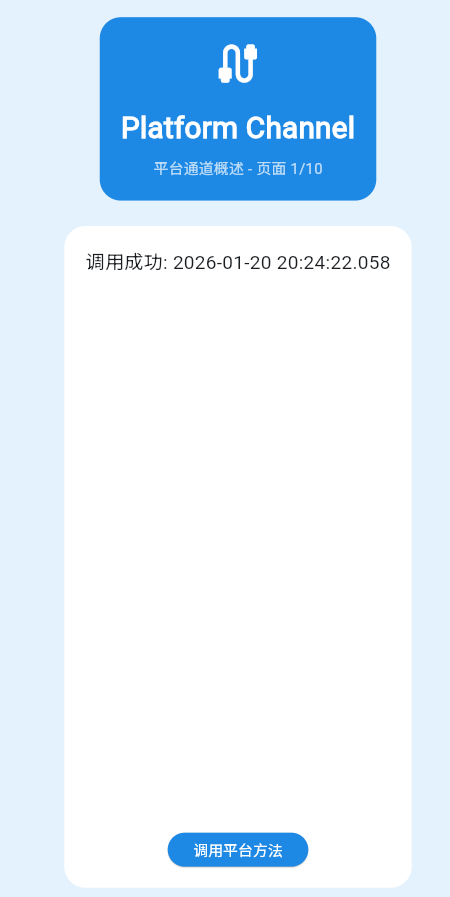
平台通道概述
一、Platform Channel基础概念
Platform Channel是Flutter与原生平台通信的桥梁,实现Flutter与HarmonyOS的数据交换。它是Flutter跨平台架构的核心组件,让Flutter应用能够充分利用原生平台的能力和API。
Platform Channel的作用
Platform Channel提供了一种类型安全、异步的通信机制,使得Flutter应用可以调用原生平台的API,同时原生平台也可以主动回调Flutter。这种双向通信能力是Flutter混合开发的基础。
Platform Channel的核心特性
| 特性 | 说明 | 应用场景 |
|---|---|---|
| 双向通信 | Flutter可调用原生,原生也可回调Flutter | 方法调用、事件推送 |
| 类型安全 | 支持基本类型和复杂对象 | 传递数据结构 |
| 异步执行 | 调用不阻塞主线程 | 网络请求、文件操作 |
| 多通道 | 支持多个独立通道 | 模块化通信 |
Platform Channel的架构层次
通信流程详解
Platform Channel的通信过程包括:方法调用、参数编解码、消息传输、结果返回等步骤。整个过程是异步的,不会阻塞Flutter的UI线程。
编解码机制
| 数据类型 | Dart | HarmonyOS | 编码方式 |
|---|---|---|---|
| null | null | null | 特殊标记 |
| bool | bool | Boolean | 1字节 |
| int | int | Number | 变长整数 |
| double | double | Number | 8字节浮点 |
| String | String | String | UTF-8编码 |
| List | List | Array | 递归编码 |
| Map | Map | Object | 键值对编码 |
二、Platform Channel的类型
Platform Channel有多种类型,每种类型适用于不同的通信场景。
通道类型分类
MethodChannel详解
MethodChannel是最常用的通道类型,用于方法调用。
| 特性 | 说明 | 典型应用 |
|---|---|---|
| 方法调用 | 类似RPC调用 | 调用原生API |
| 请求响应 | 同步风格异步实现 | 获取数据 |
| 异常处理 | 统一的异常机制 | 错误处理 |
| 类型安全 | 编解码保证类型 | 数据交换 |
// Flutter端定义
static const platform = MethodChannel('com.example.demo/methods');

Future<String> getPlatformVersion() async {
  try {
    final String version = await platform.invokeMethod('getPlatformVersion');
    return version;
  } on PlatformException catch (e) {
    return 'Failed to get platform version: ${e.message}';
  }
}
EventChannel详解
EventChannel用于事件流的单向通信,适合持续的数据推送。
| 特性 | 说明 | 典型应用 |
|---|---|---|
| 事件流 | 持续的事件推送 | 传感器数据 |
| 异步流 | Stream形式 | 位置更新 |
| 取消订阅 | 支持取消 | 资源管理 |
| 自动重连 | 断线自动重连 | 网络连接 |
// Flutter端使用
static const eventChannel = EventChannel('com.example.demo/events');

Stream<Map<String, dynamic>> getEventStream() {
  return eventChannel.receiveBroadcastStream().map((event) {
    return Map<String, dynamic>.from(event);
  });
}
MessageChannel详解
MessageChannel提供最基础的双向消息传递。
| 特性 | 说明 | 典型应用 |
|---|---|---|
| 双向通信 | 消息双向传递 | 持续通信 |
| 二进制数据 | 原始字节传输 | 图片、文件 |
| 低延迟 | 轻量级传输 | 实时数据 |
| 灵活性高 | 自定义协议 | 特殊场景 |
// Flutter端使用
static const messageChannel = BasicMessageChannel<String>(
  'com.example.demo/messages',
  StringCodec(),
);

Future<String> sendMessage(String message) async {
  return await messageChannel.send(message);
}
通道类型选择决策
通道类型对比表
| 对比维度 | MethodChannel | EventChannel | MessageChannel |
|---|---|---|---|
| 通信方向 | 双向请求响应 | 单向事件流 | 双向消息 |
| 数据类型 | 支持复杂对象 | 支持复杂对象 | 二进制数据 |
| 使用场景 | 方法调用 | 事件推送 | 自定义协议 |
| 复杂度 | 中 | 低 | 高 |
| 性能 | 良好 | 优秀 | 优秀 |
三、MethodChannel基础实现
MethodChannel是Platform Channel中最常用的类型,掌握其基础实现是关键。
MethodChannel工作流程
完整示例代码
class _Page01PlatformChannel extends StatefulWidget {
const _Page01PlatformChannel();
State<_Page01PlatformChannel> createState() => _Page01PlatformChannelState();
}
class _Page01PlatformChannelState extends State<_Page01PlatformChannel> {
static const platform = MethodChannel('com.example.demo/channel');
String _result = '未调用';
bool _isLoading = false;
Future<void> _callNativeMethod() async {
setState(() {
_isLoading = true;
_result = '调用中...';
});
try {
// 模拟平台调用(实际项目中会调用原生方法)
await Future.delayed(const Duration(seconds: 1));
if (mounted) {
setState(() {
_result = '调用成功: ${DateTime.now().toLocal()}';
_isLoading = false;
});
}
} catch (e) {
if (mounted) {
setState(() {
_result = '错误: $e';
_isLoading = false;
});
}
}
}
Widget build(BuildContext context) {
return Container(
color: Colors.blue.shade50,
padding: const EdgeInsets.all(20),
child: Column(
children: [
Container(
padding: const EdgeInsets.all(20),
decoration: BoxDecoration(
color: Colors.blue.shade600,
borderRadius: BorderRadius.circular(20),
),
child: const Column(
children: [
Icon(Icons.cable, size: 48, color: Colors.white),
SizedBox(height: 16),
Text(
'Platform Channel',
style: TextStyle(fontSize: 28, fontWeight: FontWeight.bold, color: Colors.white),
),
SizedBox(height: 8),
Text('平台通道概述 - 页面 1/10', style: TextStyle(color: Colors.white70)),
],
),
),
const SizedBox(height: 24),
Expanded(
child: Container(
padding: const EdgeInsets.all(20),
decoration: BoxDecoration(color: Colors.white, borderRadius: BorderRadius.circular(20)),
child: Column(
children: [
if (_isLoading)
const Center(child: CircularProgressIndicator())
else if (_result.isNotEmpty)
Text(_result, style: const TextStyle(fontSize: 18))
else
const Text('点击按钮调用平台方法', style: TextStyle(fontSize: 16, color: Colors.grey)),
const Spacer(),
ElevatedButton(
onPressed: _isLoading ? null : _callNativeMethod,
style: ElevatedButton.styleFrom(backgroundColor: Colors.blue.shade600),
child: const Text('调用平台方法', style: TextStyle(color: Colors.white)),
),
],
),
),
),
],
),
);
}
}
通道命名规范
| 规范 | 示例 | 说明 |
|---|---|---|
| 反向域名 | com.example.demo/channel |
避免命名冲突 |
| 语义清晰 | battery/methods |
明确通道用途 |
| 模块化 | user/profile |
按模块组织 |
| 小写字母 | my_channel |
保持一致性 |
方法调用参数传递
// 简单参数
await platform.invokeMethod('simpleMethod', 'parameter');

// Map参数
await platform.invokeMethod('complexMethod', {
  'name': 'Flutter',
  'version': 3.0,
  'features': ['hot-reload', 'widget'],
});

// List参数
await platform.invokeMethod('listMethod', [1, 2, 3, 4, 5]);
异常处理
try {
  final result = await platform.invokeMethod('dangerousMethod');
} on PlatformException catch (e) {
  // 平台方法抛出的异常
  print('PlatformException: ${e.code}');
  print('Message: ${e.message}');
  print('Details: ${e.details}');
} on MissingPluginException catch (e) {
  // 原生端未实现方法
  print('MissingPluginException: 方法未实现');
} catch (e) {
  // 其他异常
  print('Unexpected error: $e');
}
四、Platform Channel的通信流程
深入了解Platform Channel的内部通信流程,有助于理解其工作原理和优化性能。
通信阶段划分
阶段详解
| 阶段 | 操作 | 说明 | 性能影响 |
|---|---|---|---|
| 1. 编码 | 序列化数据 | Dart对象转换为平台格式 | 中等 |
| 2. 传输 | 跨平台传递 | 通过消息机制传递 | 低 |
| 3. 处理 | 执行原生操作 | 原生平台执行逻辑 | 取决于操作 |
| 4. 解码 | 反序列化数据 | 平台格式转换为Dart对象 | 中等 |
| 5. 响应 | 返回结果 | 原生方法返回结果 | 低 |
消息编解码流程
性能优化策略
性能对比
| 优化措施 | 优化前 | 优化后 | 提升 |
|---|---|---|---|
| 数据量 | 1MB | 100KB | 10x |
| 调用次数 | 100次 | 10次 | 10x |
| 编解码时间 | 50ms | 5ms | 10x |
| 总耗时 | 200ms | 20ms | 10x |
五、数据类型支持
Platform Channel支持多种数据类型,理解这些类型对于正确使用Channel至关重要。
Dart与HarmonyOS类型映射
| Dart类型 | HarmonyOS类型 | 编码方式 | 说明 |
|---|---|---|---|
| null | null | 特殊标记 | 空值 |
| bool | Boolean | 1字节 | 布尔值 |
| int | Number | 变长整数 | 整数,可能有范围限制 |
| double | Number | 8字节浮点 | 浮点数 |
| String | String | UTF-8编码 | 字符串 |
| List | Array | 递归编码 | 数组,元素类型需一致 |
| Map | Object | 键值对编码 | 对象,key必须是String |
| Uint8List | Int8Array | 直接传输 | 二进制数据 |
复杂数据类型示例
// 嵌套Map
final userData = await platform.invokeMethod('getUser', {
  'userId': 123,
  'options': {
    'includeProfile': true,
    'includeSettings': true,
  },
});

// List对象
final userList = await platform.invokeMethod('getUsers', {
  'ids': [1, 2, 3, 4, 5],
  'fields': ['name', 'email', 'avatar'],
});

// 混合类型
final complexData = await platform.invokeMethod('complexMethod', {
  'numbers': [1, 2, 3],
  'strings': ['a', 'b', 'c'],
  'nested': {
    'level1': {
      'level2': 'value',
    },
  },
});
类型限制与注意事项
| 限制 | 说明 | 解决方案 |
|---|---|---|
| Map key限制 | key必须是String | 使用字符串key |
| 类型一致性 | List元素类型一致 | 统一元素类型 |
| 大小限制 | 消息有大小限制 | 分块传输大文件 |
| 深度限制 | 嵌套深度有限制 | 扁平化数据结构 |
| 循环引用 | 不支持循环引用 | 避免循环引用 |
类型转换最佳实践
// ✅ 好的实践:明确类型转换
final result = await platform.invokeMethod('getData');
final int count = result as int;
final String name = result['name'] as String;
final List<dynamic> items = (result['items'] as List).cast<dynamic>();

// ❌ 不好的实践:缺乏类型检查
final result = await platform.invokeMethod('getData');
final count = result['count']; // 可能抛出类型错误
自定义类型处理
// Dart端定义自定义类型
class User {
  final String id;
  final String name;
  final String email;

  User({required this.id, required this.name, required this.email});

  Map<String, dynamic> toMap() {
    return {
      'id': id,
      'name': name,
      'email': email,
    };
  }

  factory User.fromMap(Map<String, dynamic> map) {
    return User(
      id: map['id'] as String,
      name: map['name'] as String,
      email: map['email'] as String,
    );
  }
}

// 使用自定义类型
Future<User> getUser(String id) async {
  final result = await platform.invokeMethod('getUser', {'id': id});
  return User.fromMap(result as Map<String, dynamic>);
}

Future<void> createUser(User user) async {
  await platform.invokeMethod('createUser', user.toMap());
}
六、Platform Channel的最佳实践
遵循最佳实践能够确保Platform Channel的使用更加高效、稳定和可维护。
命名规范
最佳实践检查清单
| 实践 | 说明 | 重要性 |
|---|---|---|
| 唯一通道名称 | 使用反向域名避免冲突 | ⭐⭐⭐⭐⭐ |
| 错误处理 | 全面处理异步调用错误 | ⭐⭐⭐⭐⭐ |
| mounted检查 | 异步回调前检查mounted | ⭐⭐⭐⭐ |
| 清晰错误信息 | 提供可读的错误消息 | ⭐⭐⭐⭐ |
| 文档完善 | 说明方法参数和返回值 | ⭐⭐⭐ |
| 性能优化 | 减少调用次数和数据量 | ⭐⭐⭐ |
错误处理完整示例
Future<Result<T>> safeInvoke<T>(MethodChannel channel, String method, {
  dynamic arguments,
}) async {
  try {
    if (!mounted) {
      return Result.error('Widget已经销毁');
    }

    final result = await channel.invokeMethod(method, arguments);
    return Result.success(result as T);
  } on PlatformException catch (e) {
    return Result.error(
      'Platform Error: ${e.message}',
      code: e.code,
      details: e.details,
    );
  } on MissingPluginException catch (e) {
    return Result.error('方法未实现: $method');
  } catch (e) {
    return Result.error('未知错误: $e');
  }
}

// 使用示例
final result = await safeInvoke<String>(
  platform,
  'getPlatformVersion',
);

if (result.isSuccess) {
  print('平台版本: ${result.data}');
} else {
  print('错误: ${result.error}');
}
性能优化建议
常见陷阱与解决方案
| 陷阱 | 问题 | 解决方案 |
|---|---|---|
| 内存泄漏 | 异步回调持有Context | 使用mounted检查 |
| 类型错误 | 动态类型转换失败 | 添加类型断言 |
| 阻塞UI | 原生操作耗时过长 | 异步执行 |
| 方法未实现 | MissingPluginException | 检查原生端实现 |
| 数据丢失 | 序列化/反序列化错误 | 验证数据类型 |
| 死锁 | 同步等待异步结果 | 使用async/await |
架构设计建议
七、Platform Channel的高级应用
掌握高级应用能够充分发挥Platform Channel的潜力。
服务封装模式
// Platform Service基类
abstract class PlatformService {
  final MethodChannel _channel;

  PlatformService(String channelName) : _channel = MethodChannel(channelName);

  Future<T> invoke<T>(String method, {dynamic arguments}) {
    return _channel.invokeMethod(method, arguments).then((result) => result as T);
  }

  Future<Result<T>> safeInvoke<T>(String method, {dynamic arguments}) async {
    try {
      final result = await invoke(method, arguments: arguments);
      return Result.success(result as T);
    } catch (e) {
      return Result.error(e.toString());
    }
  }
}

// 具体服务实现
class BatteryService extends PlatformService {
  static const String _channelName = 'com.example.demo/battery';
  static const String _getMethod = 'getBatteryLevel';

  BatteryService() : super(_channelName);

  Future<int> getBatteryLevel() => invoke<int>(_getMethod);

  Future<bool> isCharging() => safeInvoke<bool>('isCharging')
      .then((result) => result.isSuccess ? result.data ?? false : false);
}
双向通信实现
class BidirectionalChannel {
  final MethodChannel _channel;
  final Map<String, Function> _handlers = {};

  BidirectionalChannel(String channelName) : _channel = MethodChannel(channelName) {
    _channel.setMethodCallHandler(_handleMethodCall);
  }

  Future<T?> invoke<T>(String method, {dynamic arguments}) {
    return _channel.invokeMethod(method, arguments);
  }

  void registerHandler(String method, Function handler) {
    _handlers[method] = handler;
  }

  Future<dynamic> _handleMethodCall(MethodCall call) async {
    final handler = _handlers[call.method];
    if (handler != null) {
      return handler(call.arguments);
    }
    throw MissingPluginException('Method not implemented: ${call.method}');
  }

  void dispose() {
    _channel.setMethodCallHandler(null);
    _handlers.clear();
  }
}
批量调用优化
class BatchInvoker {
  final MethodChannel _channel;
  final List<_PendingCall> _pendingCalls = [];

  BatchInvoker(this._channel);

  Future<T> add<T>(String method, {dynamic arguments}) async {
    final completer = Completer<T>();
    _pendingCalls.add(_PendingCall(method, arguments, completer));
    return completer.future;
  }

  Future<void> execute() async {
    if (_pendingCalls.isEmpty) return;

    final batchData = _pendingCalls.map((call) => {
      'method': call.method,
      'arguments': call.arguments,
    }).toList();

    try {
      final results = await _channel.invokeMethod('batchExecute', batchData) as List;
      for (int i = 0; i < _pendingCalls.length; i++) {
        _pendingCalls[i].completer.complete(results[i]);
      }
    } catch (e) {
      for (var call in _pendingCalls) {
        call.completer.completeError(e);
      }
    } finally {
      _pendingCalls.clear();
    }
  }
}

class _PendingCall {
  final String method;
  final dynamic arguments;
  final Completer completer;

  _PendingCall(this.method, this.arguments, this.completer);
}
缓存机制
class CachedPlatformService {
  final MethodChannel _channel;
  final Map<String, _CacheEntry> _cache = {};
  final Duration _defaultTtl;

  CachedPlatformService(
    String channelName, {
    Duration defaultTtl = const Duration(minutes: 5),
  })  : _channel = MethodChannel(channelName),
        _defaultTtl = defaultTtl;

  Future<T> get<T>(String key, Future<T> Function() fetcher) async {
    final entry = _cache[key];
    if (entry != null && !entry.isExpired) {
      return entry.value as T;
    }

    final value = await fetcher();
    _cache[key] = _CacheEntry(value, _defaultTtl);
    return value;
  }

  void invalidate(String key) {
    _cache.remove(key);
  }

  void clear() {
    _cache.clear();
  }
}

class _CacheEntry {
  final dynamic value;
  final DateTime expiry;

  _CacheEntry(this.value, Duration ttl) : expiry = DateTime.now().add(ttl);

  bool get isExpired => DateTime.now().isAfter(expiry);
}
八、Platform Channel的调试与测试
有效的调试和测试能够保证Platform Channel的可靠性和稳定性。
调试工具和方法
日志封装
class ChannelLogger {
  final String channelName;
  final bool enableLog;

  ChannelLogger(this.channelName, {this.enableLog = true});

  void logMethod(String method, dynamic arguments) {
    if (enableLog) {
      print('[Channel:$channelName] Method: $method, Args: $arguments');
    }
  }

  void logResult(dynamic result) {
    if (enableLog) {
      print('[Channel:$channelName] Result: $result');
    }
  }

  void logError(dynamic error) {
    if (enableLog) {
      print('[Channel:$channelName] Error: $error');
    }
  }
}
性能监控
class ChannelPerformanceMonitor {
  final Map<String, _CallStats> _stats = {};

  Future<T> monitor<T>(
    MethodChannel channel,
    String method, {
    dynamic arguments,
  }) async {
    final stopwatch = Stopwatch()..start();
    try {
      final result = await channel.invokeMethod(method, arguments);
      _recordSuccess(method, stopwatch.elapsed);
      return result as T;
    } catch (e) {
      _recordFailure(method, stopwatch.elapsed);
      rethrow;
    }
  }

  void _recordSuccess(String method, Duration duration) {
    final stats = _stats[method] ?? _CallStats();
    stats.recordSuccess(duration);
    _stats[method] = stats;
  }

  void _recordFailure(String method, Duration duration) {
    final stats = _stats[method] ?? _CallStats();
    stats.recordFailure(duration);
    _stats[method] = stats;
  }

  void printReport() {
    print('\n=== Channel Performance Report ===');
    _stats.forEach((method, stats) {
      print('$method:');
      print('  Calls: ${stats.totalCount}');
      print('  Success: ${stats.successCount}');
      print('  Failure: ${stats.failureCount}');
      print('  Avg Time: ${stats.averageTime}');
      print('  Max Time: ${stats.maxTime}');
    });
  }
}

class _CallStats {
  int totalCount = 0;
  int successCount = 0;
  int failureCount = 0;
  Duration totalDuration = Duration.zero;
  Duration maxDuration = Duration.zero;

  void recordSuccess(Duration duration) {
    totalCount++;
    successCount++;
    totalDuration += duration;
    if (duration > maxDuration) {
      maxDuration = duration;
    }
  }

  void recordFailure(Duration duration) {
    totalCount++;
    failureCount++;
    totalDuration += duration;
  }

  String get averageTime {
    if (totalCount == 0) return '0ms';
    final avg = totalDuration.inMilliseconds / totalCount;
    return '${avg.toStringAsFixed(2)}ms';
  }

  String get maxTime => '${maxDuration.inMilliseconds}ms';
}
单元测试
class MockPlatformChannel {
  final Map<String, Function> _handlers = {};

  void registerHandler(String method, Function handler) {
    _handlers[method] = handler;
  }

  Future<dynamic> invokeMethod(String method, [dynamic arguments]) async {
    final handler = _handlers[method];
    if (handler == null) {
      throw MissingPluginException('Method not implemented: $method');
    }
    return handler(arguments);
  }
}

void main() {
  test('BatteryService returns battery level', () async {
    final mockChannel = MockPlatformChannel();
    mockChannel.registerHandler('getBatteryLevel', (_) => 85);

    final service = BatteryService();
    // 注入mock channel...

    final level = await service.getBatteryLevel();
    expect(level, equals(85));
  });
}
测试策略
| 测试类型 | 目的 | 工具 | 覆盖率 |
|---|---|---|---|
| 单元测试 | 测试单个方法 | mock | 80% |
| 集成测试 | 测试完整流程 | 设备/模拟器 | 60% |
| 性能测试 | 测试响应时间 | 性能监控 | 100% |
| 稳定性测试 | 测试异常情况 | 压力测试 | 100% |
欢迎加入开源鸿蒙跨平台社区:https://openharmonycrossplatform.csdn.net

讨论HarmonyOS开发技术,专注于API与组件、DevEco Studio、测试、元服务和应用上架分发等。
更多推荐

 13
13 0
0- 0



 已为社区贡献3条内容

所有评论(0)